EALDE Business School. Corporate Website
Client
EALDE Business School
Timeline
December 2021 - April 2022
Skills
UX/UI · Web design
Tools
WordPress · Divi · WooCommerce · Salesforce CRM · GoToWebinar
The challenge
When I joined EALDE, the corporate website was running on a generic WordPress template with no trace of the school's visual identity. Load times averaged 5 seconds. The site held a long tail of legacy content: 88 active training programmes, blog posts dating back to 2015, and pages for past events; all of which needed to be preserved through any rebuild.
The marketing team was also mid-way through a manual "landing-ification" of programme pages: converting each of the 88 programmes into a dedicated landing page, one by one, by hand. With that many programmes and data that changed constantly, the process was slow, repetitive and error-prone; every update to a programme meant manually editing the website, the corresponding brochure, and several advertising landing pages used for A/B-tested campaigns.
I was given the green light to rebuild the site from scratch. We stayed on WordPress deliberately: the community manager who published blog content relied on that workflow, and migrating years of existing posts without disruption was a priority.
My role
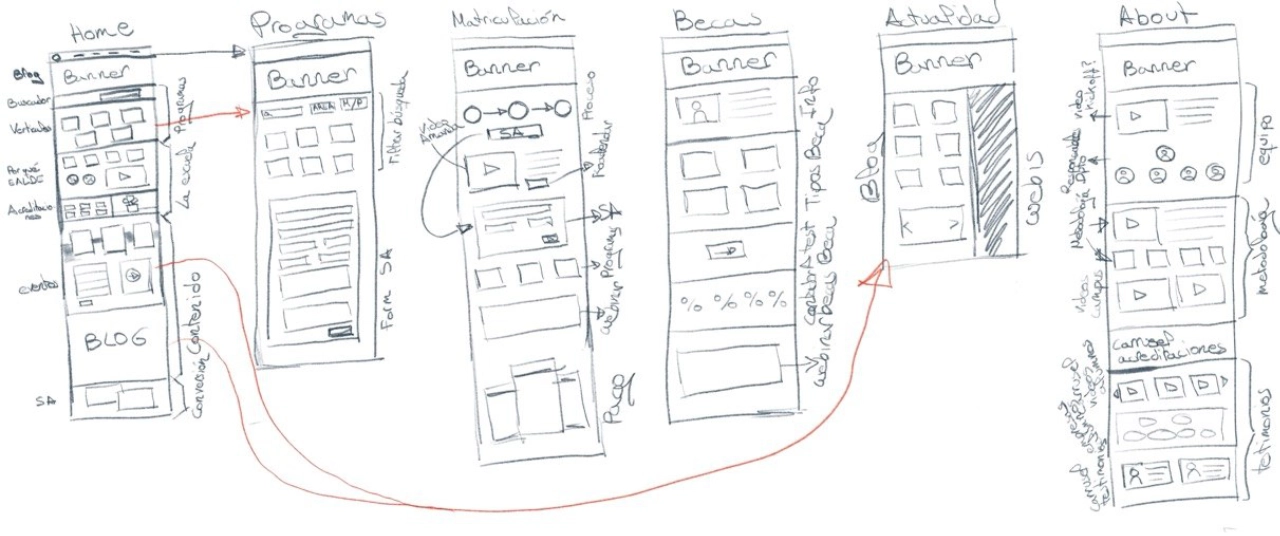
I led the full rebuild of the corporate website: visual design aligned with EALDE's brand, the underlying WooCommerce-based architecture for programme management, and three custom integrations (cross-site landing sync, automated brochure generation and GoToWebinar) built to eliminate manual, repetitive work across teams.
The architecture
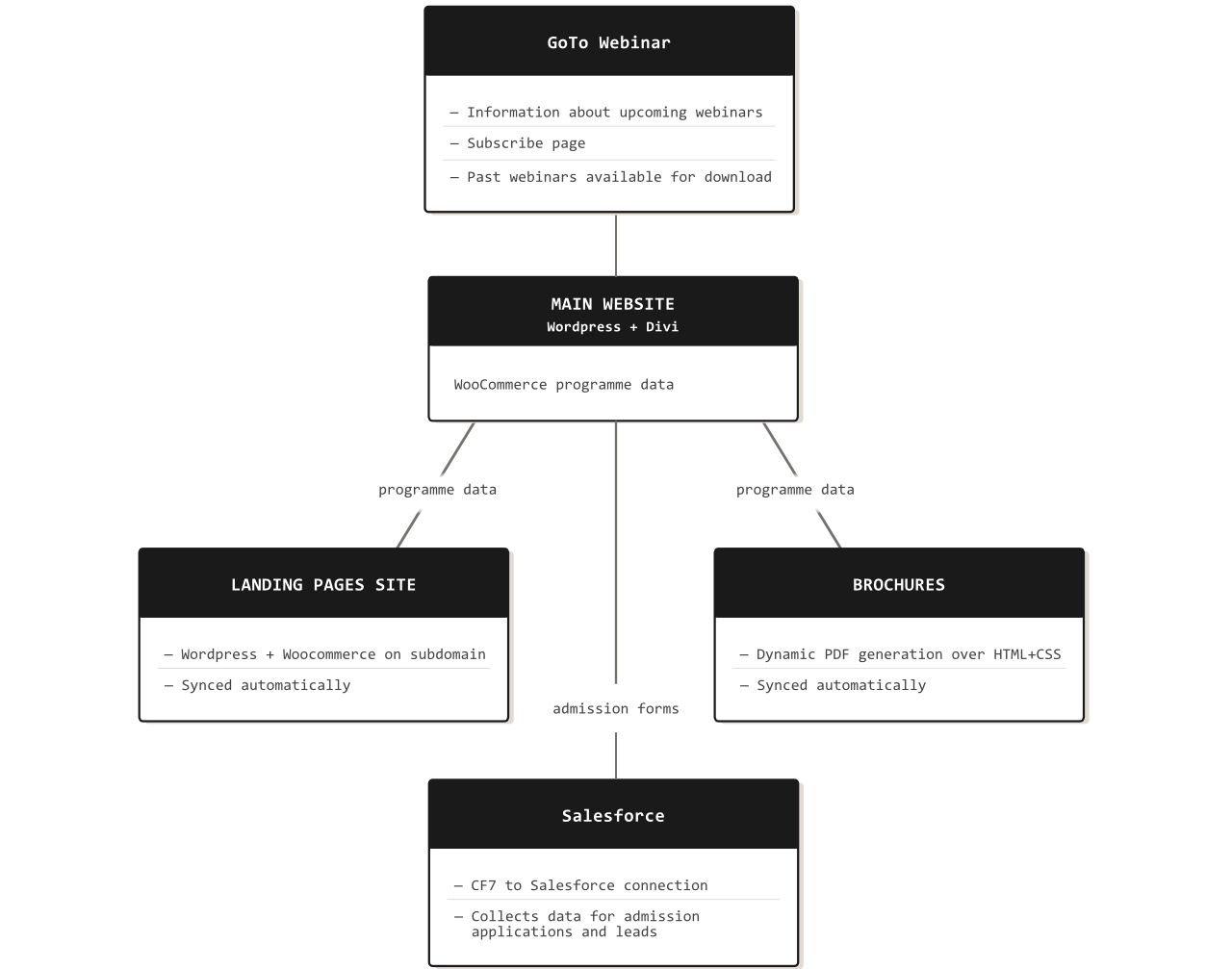
Rather than building programme pages as static content, I modelled each of the 88 training programmes as a WooCommerce product, with every content block (name, description, "why study this", FAQs, target audience, etc.) stored as a custom field. Using Divi's Theme Builder, I created a single page template applied across all programmes, so a design change could be rolled out instantly to all 88 pages at once instead of one by one.
To solve the landing page problem, I set up a second WordPress instance on a subdomain, with its own WooCommerce installation linked to the main site's product data. Updating a programme's information in one place automatically propagated the change to every corresponding landing page, removing the need to manually update each one and eliminating an entire category of human error from the team's workflow.
Brochures were the third piece. Previously, every programme update meant manually editing an InDesign file, exporting it, and re-uploading it to both Cloudinary and Issuu. Working with an external development partner, I built a system that generated brochures with dynamic text pulled directly from the same WooCommerce custom fields, so brochures stayed in sync with the website and landing pages without manual production work.
Integrations
GoToWebinar: Connected via plugin, with custom CSS work to display upcoming webinars in a format consistent with the site's design, plus a dedicated event registration flow and a section for downloading recordings of past events.
Salesforce CRM: Replaced a Zapier-based integration that frequently failed, connecting admission request forms directly to Salesforce so leads reached the sales team reliably and in real time.
The result
A single content update now reaches the website, every relevant landing page, and the corresponding brochure automatically, work that previously required manually editing each surface by hand across a catalogue of 88 programmes.
Load times were reduced from 5 seconds to 2.3 seconds, and the new architecture gave the marketing team a scalable system instead of a manual one.
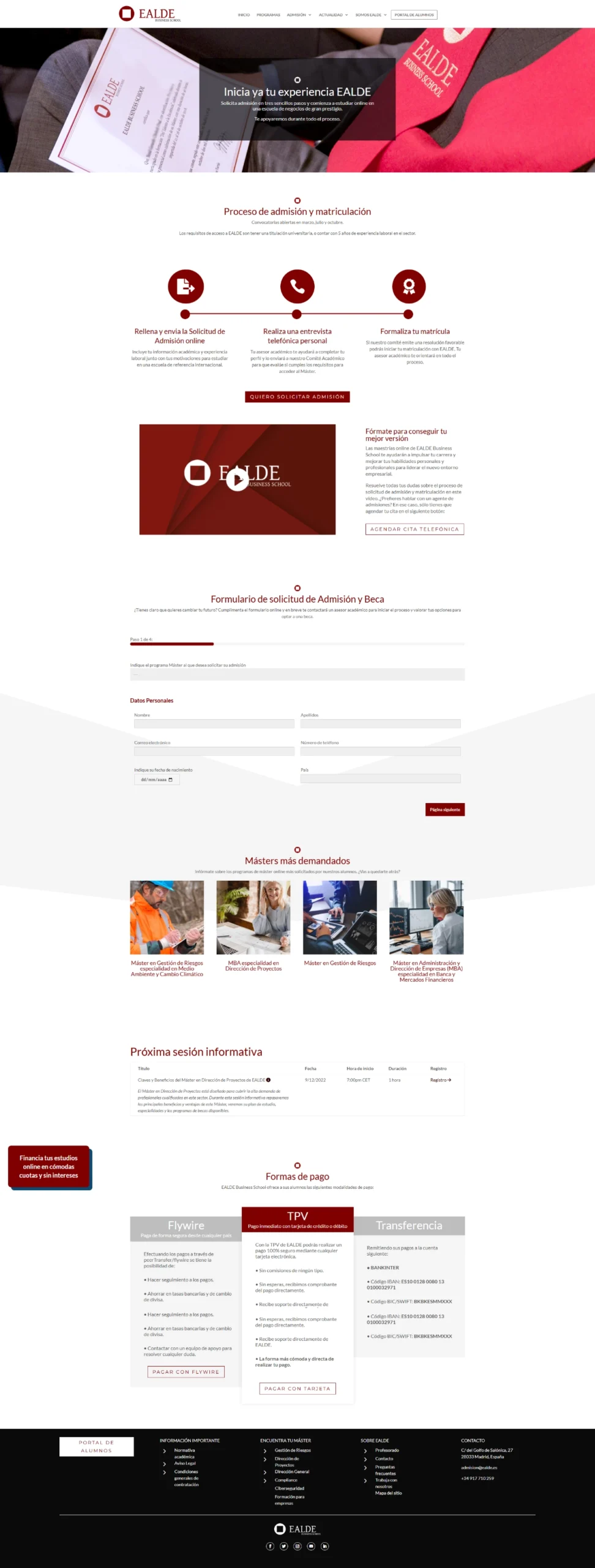
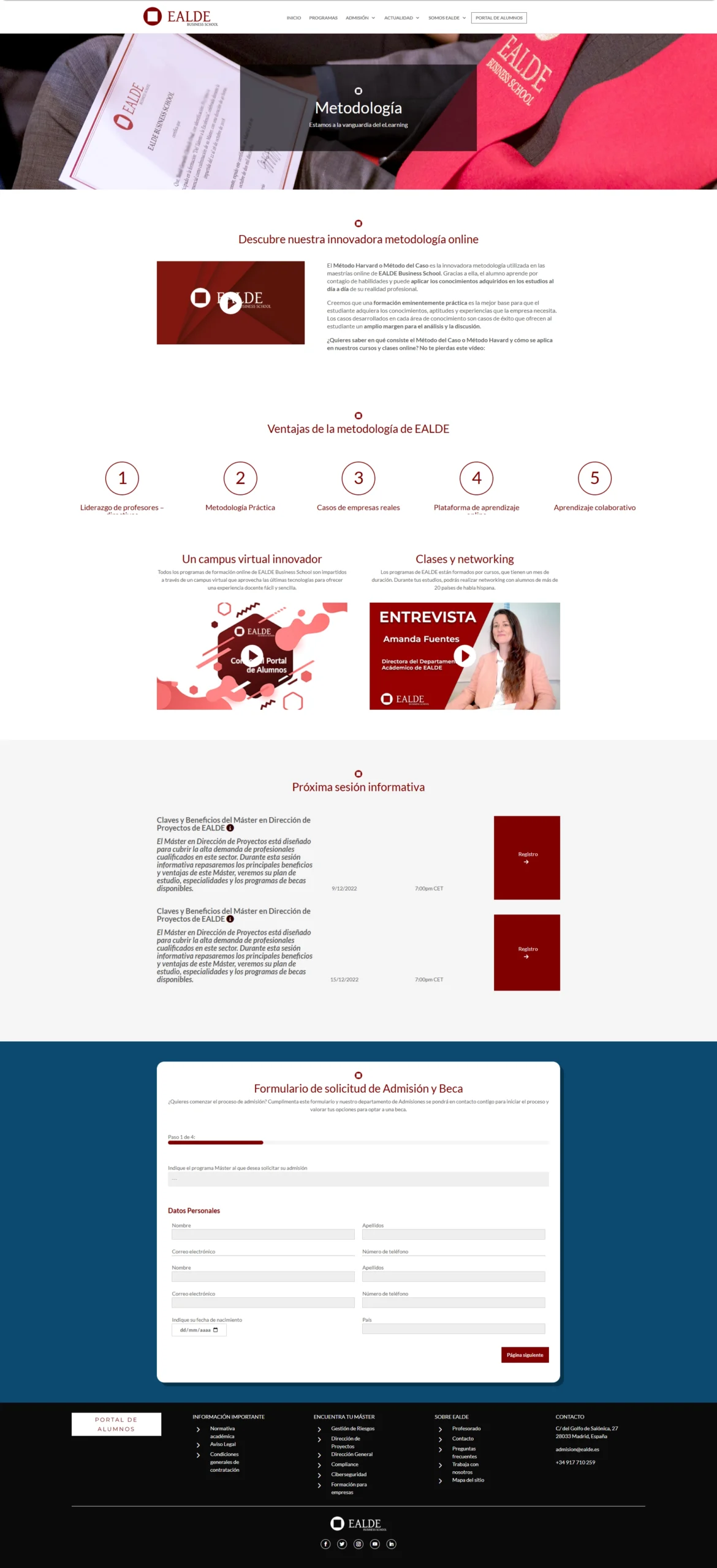
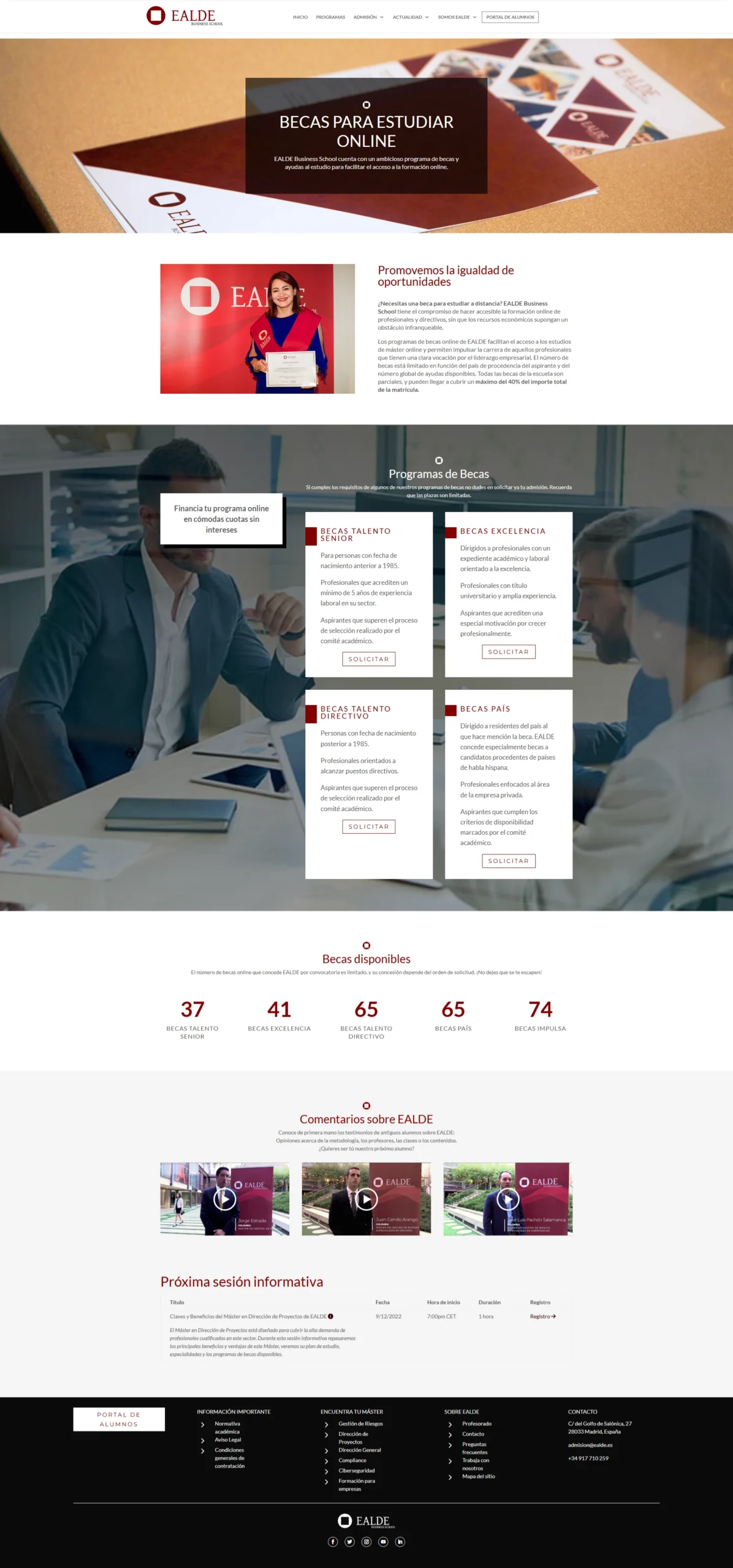
A note on the current site
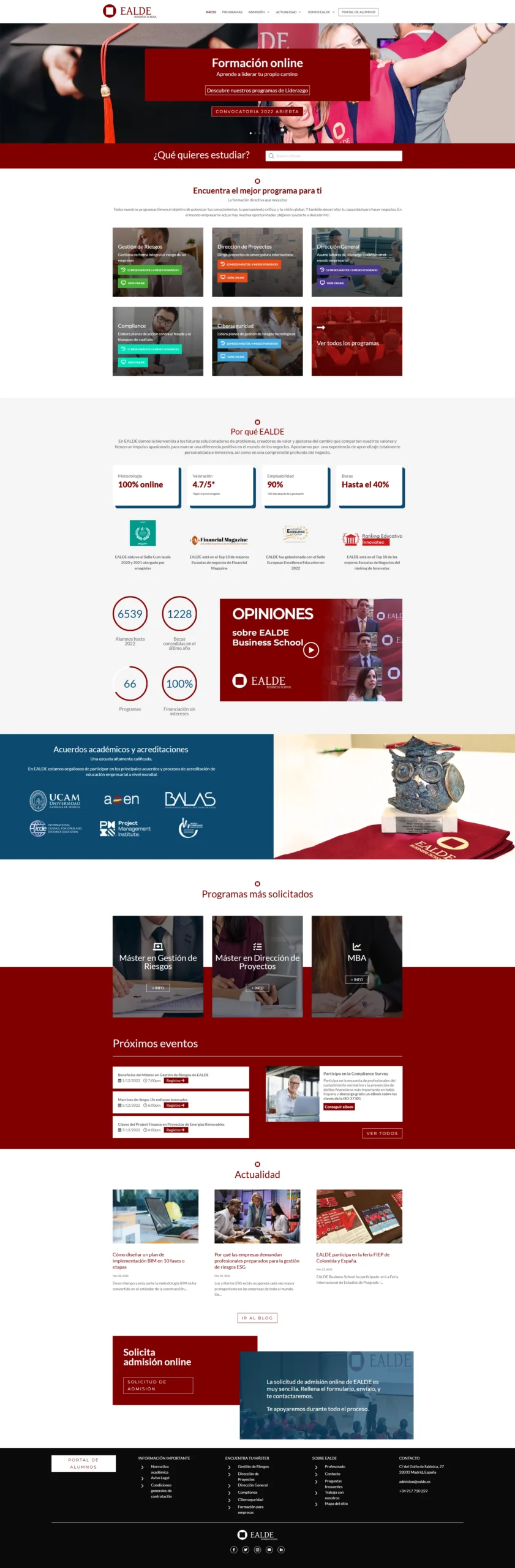
The website's overall visual design was updated by a different team following EALDE's rebranding. The technical architecture described in this case study (the WooCommerce-based programme system, the cross-site landing page sync, and the integrations with Salesforce and GoToWebinar) remains in place. I've since redesigned several individual pages within the new visual identity, including the programme pages.